

Unraveling the laws of Fantasy (META)
Art works like Japanese gardens, lacquerware, Phoenix (Hi-no-Tori), and Studio Ghibli’s The Boy and the Heron illustrate a meta-cultural perspective. These creations beautifully portray a world where technology, culture, tradition, innovation, and nature coexist in parallel.
(Meta: Pertaining to higher levels, transcendent, or the awareness of one’s cognitive processes.)
However, words like “parallel world” or “higher dimensions” may not immediately conjure up clear images for everyone. That’s why, in this article, I’d like to introduce two works that masterfully express the concept of space-time dimensions: Lewis Carroll’s Alice in Wonderland, famous for its Disney adaptation, and the film Interstellar.
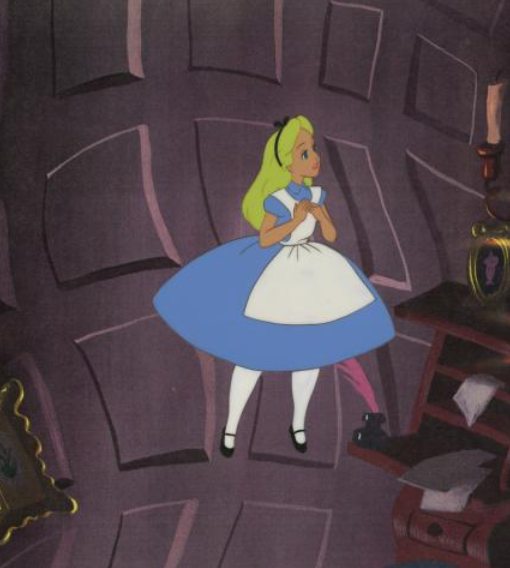
“Down, down, down…”
Just like Cooper, Alice plunges endlessly into the depths of a black hole.
Alice perceives this free fall as “slow.”
Cooper, too, falls—slowly at first.
Yet, with undeniable acceleration, he continues.
And still, he feels it as “slow.”
Why?
It’s not due to time lag, but because of the distortions in space-time caused by gravity.

https://note.com/nyalra2/n/n7c56aa9857c8
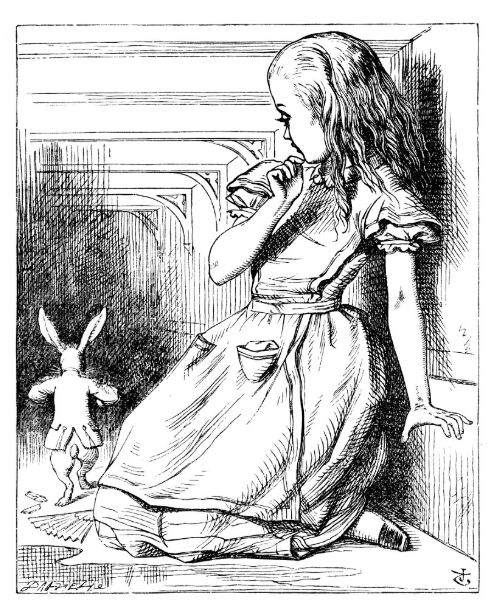
When we try to imagine a world where the foundation of everyday perception collapses, one fantasy work that is inevitably mentioned is Alice in Wonderland.
In the first part of this series, under the theme, “A Glimpse into the 5th-Dimensional Parallel World through Interstellar and Alice in Wonderland”, we’ll explore the “laws of fantasy” and “parallel worlds (dimensions).” In subsequent installments, we’ll also delve into Einstein’s theory on space distortion caused by gravity and Wonderland.
https://www.alice-in-wonderland.net/resources/pictures/alices-adventures-in-wonderland/
~ Alice in Wonderland, the movie Interstellar, and Quantum Mechanics ~
In the movie Interstellar, TARS leaves the following line:
TARS: “They have constructed this three-dimensional space inside their five-dimensional reality to allow you to understand it.”
Among the readers of this article, some of you might have heard terms like “3D” or “5D” especially in the film Interstellar. In a mathematical sense, “dimensions” generally refer to the degree of spatial extension, expressed by the number of coordinates. However, in this literary context, it represents a cosmological perspective that integrates the physical and spiritual worlds.
The material world we live in every day is three-dimensional—a space with length, width, and height. It is physical yet structurally functional in nature.
On the other hand, the fifth dimension, as portrayed in the movie Interstellar when Cooper reaches the cosmic library, is a mysterious realm where the concepts of past, present, and future time do not exist. It is also referred to as the “world of oneness,” a place without past or future, where even the flow of time is not constant.
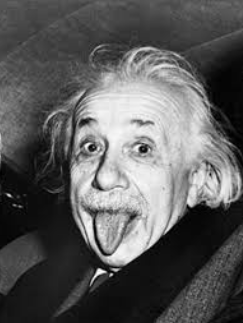
From the perspective of quantum mechanics, Einstein described this as the “world of a loving conscious entity.” To gather hints for exploring this unknown dimension, this time, we focus on Alice in Wonderland, the movie Interstellar, and in future installments, quantum mechanics.
〜About the Laws of Fantasy〜
Understanding dimensions through theories like quantum mechanics can sometimes feel overwhelming. However, the world of fantasy skillfully portrays journeys across various dimensions, not confined to just one.
Why is it that such dimensional travel is possible within fantasy worlds?
To explore this, instead of approaching dimensions from the perspective of quantum mechanics, let’s consider it through the literary lens of the laws of fantasy.
By doing so, I hope this provides a deeper understanding of dimensions and parallel worlds.
〜Fantasy Works and Their Unique “Laws” 〜
It is said that fantasy works have their own unique “laws.”

https://www.gla.ac.uk/postgraduate/taught/fantasy/
Two representative examples are as follows:
[1] The protagonist forgets their own name and experiences an identity crisis as the story unfolds. Eventually, they overcome trials and reclaim their name.
[2] The protagonist wanders through different dimensions, gains insights through various dramas, and returns to their original world.
These elements are commonly depicted in fantasy works such as Spirited Away and Through the Looking-Glass (the sequel to Alice’s Adventures in Wonderland).
[1] Studio Ghibli’s Works: Through the Looking-Glass and Spirited Away
The work Through the Looking-Glass is the sequel to Alice’s Adventures in Wonderland. Though it may not be as well-known, it was created by Lewis Carroll, a mathematician at Oxford University. This story features a unique setting where the protagonist, Alice, becomes a chess piece and advances through a game.
https://wonderland.fandom.com/wiki/Fawn
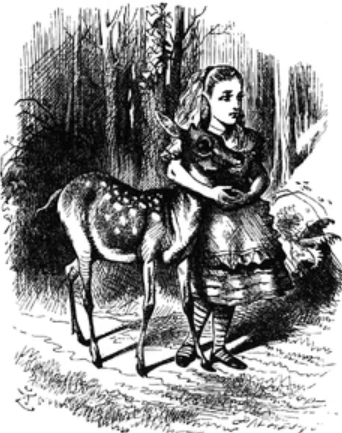
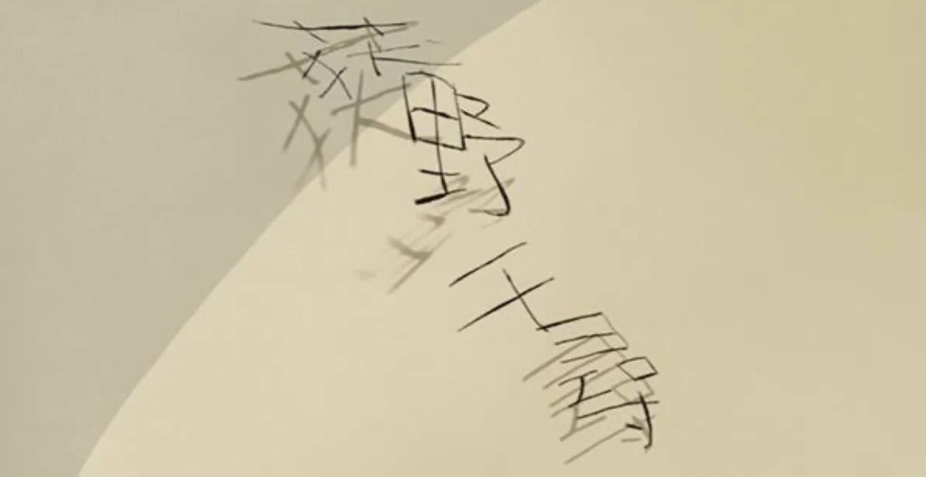
In Chapter 3 of Through the Looking-Glass, there is a scene where Alice enters a place called the “Forest of No Names,” where names of things are forgotten. There, Alice encounters an adorable fawn. Upon meeting the fawn, Alice forgets her own name. They become friendly in the forest and walk together, but when they leave the forest called the “Forest of No Names,” Alice reminds herself that “I am human” and “my name is Alice.” Then immediately, the fawn runs away.
Incidentally, an interpretation of this work suggests that the fawn is explained to be the same as Alice, representing the white pawn in chess. It is also said that the pairing of the words “pawn” and “fawn” creates a rhyme.
On the other hand, in Studio Ghibli’s Spirited Away, Yubaba takes away Chihiro’s name in an attempt to control her. However, Chihiro gradually reminds her of a name that she had almost forgotten during the story. The process of losing and reclaiming her name is skillfully depicted as a theme deeply connected to self-awareness and the establishment of identity.

[2] Journeys Across Dimensions
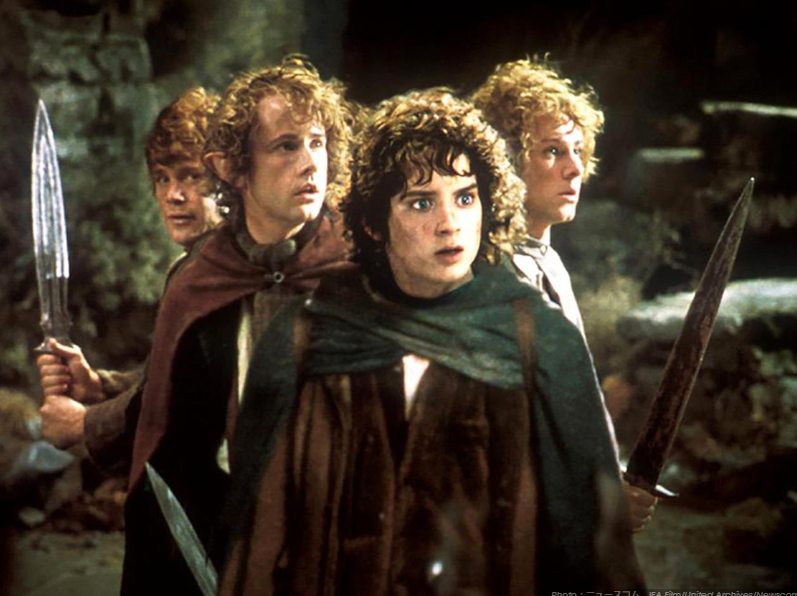
This theme is commonly depicted in many fantasy works, such as The Lord of the Rings, My Neighbor Totoro, Alice’s Adventures in Wonderland, and Through the Looking-Glass.

https://front-row.jp/_ct/17567940
〜What Is the World of Dimensions? 〜
So, what exactly are “dimensions”? What constitutes the world of dimensions?
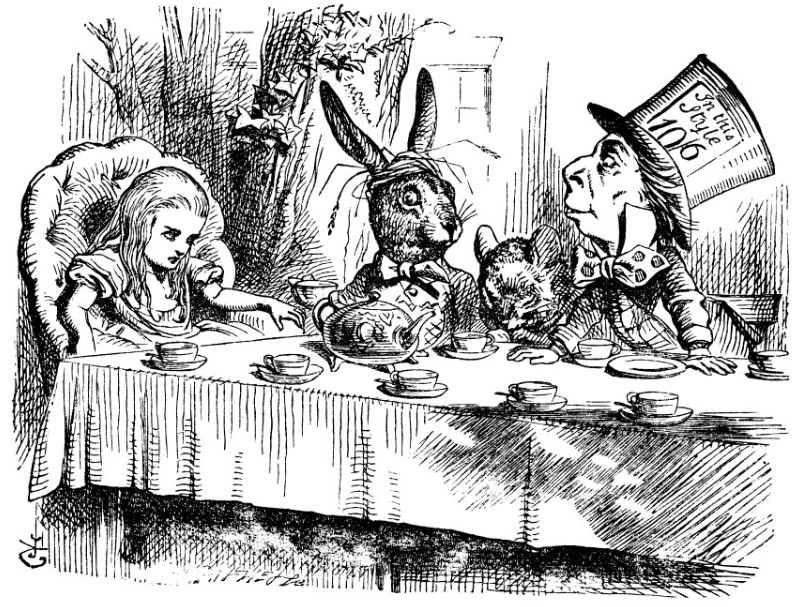
Alice embarks on a journey into dimensions by venturing into Wonderland, while Cooper reaches the fifth-dimensional world. The Wonderland that Alice dives into is a world where there are no standards or rules to unify it into one cohesive realm. It’s a chaotic world where even logic collapses, built entirely on language.
By stepping into the chaotic world of Wonderland, Alice becomes a “thinking being” (a “thinking reed”), exclaiming “curiouser and curiouser” as she searches for truth. This marks her first step toward the multidimensional.
Thus, it may be more accurate to say that rather than Wonderland itself becoming multidimensional, Alice herself reaches a stage where she enters the world of realization across dimensions.

〜What Is the Fifth Dimension?〜
The fifth dimension refers to a space with five dimensions or the concept of such a space. Generally, we perceive the three-dimensional space of length, width, and height, combined with time as the fourth dimension. The fifth dimension introduces another, distinct dimension. In the field of physics, higher-dimensional spaces such as 10 or 11 dimensions are explored in theories like superstring theory, with the fifth dimension often considered part of these higher dimensions.
〜If the material world we live in is three-dimensional, how do we approach the fifth-dimensional world? 〜
In the realm of physics, the key to traveling between dimensions—such as moving through parallel worlds—is believed to lie in gravity. The spatial distortions caused by weight, briefly mentioned earlier, connect to Einstein’s proposed “world of oneness” and “world of loving conscious beings.”
However, explaining this in detail all at once is challenging, so future installments will delve deeper into Einstein’s theories on spatial distortions.
〜Understanding the “Laws” of the Fantasy World That Traverses Between the Third and Fifth Dimensions〜
By grasping the principles governing the fantasy world that allows movement between the third and fifth dimensions, and reflecting on the worldview of all things—Alice, Cooper, and others from a meta-cognitive perspective—it may be expressed as “a way of evolving continuously while traveling through the high-dimensional time-space of parallel worlds”.